
For the last 6 decades, the limits of space endeavour have been tested, whether through rocket launches, exploration missions and human spaceflights. But driving these momentous feats, including the recent Artemis II mission, remains capital. Achieving Return on Investment (ROI) is the decisive force shaping expansion into outer space.
Historically, the financial details behind space activity were insulated from public scrutiny. Previous programmes such as Apollo were particularly obscure due to geopolitical urgency, and priorities lay in the outcome as opposed to the costs. This model is somewhat still existent in part through initiatives such as the Artemis program, which continues to rely on sustained public funding despite already exceeding USD100 billion. In parallel, however, the market-based system is emerging, driven by private sector companies such as Rocket Lab, Planet Labs, and AST SpaceMobile. The era of space business has well and truly arrived.
During the early 2020s we witnessed a wave of space companies going public through the Special Purpose Acquisition Companies (SPACs).The appeal was clearly rapid access to capital in a sector which demands billions of dollars upfront though delivering returns slowly. Through this means, valuations were earmarked on projections of future potential, be they in future constellations or the promise of data-driven services. Even global connectivity became especially investable.But as some launch schedules began to slip, and as a result of disruptions, revenues began to decline, many companies have had to learn a hard lesson. The lesson was not that the vision was flawed, but perhaps that the timeline was misjudged. Space infrastructure behaves a lot more like energy or transport, often being capital intensive and slower to scale especially in the face of any missteps.
As a result, a new environment is forming, coupled with a new hierarchy. Rocket Lab offers us the best example of adaptation in the face of change. Rather than relying solely on launch revenue, the company decided to adapt its philosophy towards expanded manufacturing and mission services. In becoming a vertically integrated stakeholder, in a similar vein to SpaceX, they diversified their income stream and ultimately reduced dependency on a single market segment. Regardless of the initial intention, the final outcome was a company strategy which aligned much more strongly with investor expectations, which is quite simply to generate revenue and continue to do so.
Virgin Galactic also illustrated a slightly different, narrative-driven approach. Despite significant public attention however, translating such interest into a consistent and scalable revenue model has proven difficult. Meanwhile, Planet Labs is currently refining its data-centric model, monetising its satellite imagery against subscriptions. Similarly, AST SpaceMobile is also adapting its strategy, leaning more to high-risk vis-a-vis high returns, placing all of its success on the reliability of its technical ability to deliver direct-to-device connectivity. But across all of these varied examples, it is evident that execution is the main determining factor for long-term survival.
The truth is, companies do face financial pressures, perhaps in even keel or more than their government counterparts. The Space Launch System (SLS), which is the central vehicle behind the Artemis mission, is estimated to cost between USD 2 billion and USD 4 billion per launch. Such figures are increasingly difficult to reconcile with a commercial environment where alternative launch systems promise significantly lower costs.
Which begs the question, Can legacy architectures co-exist with market-driven efficiency? The solution, as is increasingly most compliant for space affairs, is likely hybridisation. Governments are in the best position to provide long-term stability, while commercial actors are most capable in delivering the requisite cost discipline for longevity. We are seeing more missions combining this dual approach, as seen in NASA’s reliance on private partners for lunar landers and logistics. But this model is not without its own challenges. Economics remains a challenge when a system cannot sustain its own cadence risks.
The financialisation of space introduces novel constraints which are less visible than their engineering counterparts, though equally binding. In short, capital constraints are immediate, revenue constraints are structural, value constraints create distortions, and timing constraints, as briefly alluded to above, can be unforgiving. Each requires ongoing justification to be surmounted.
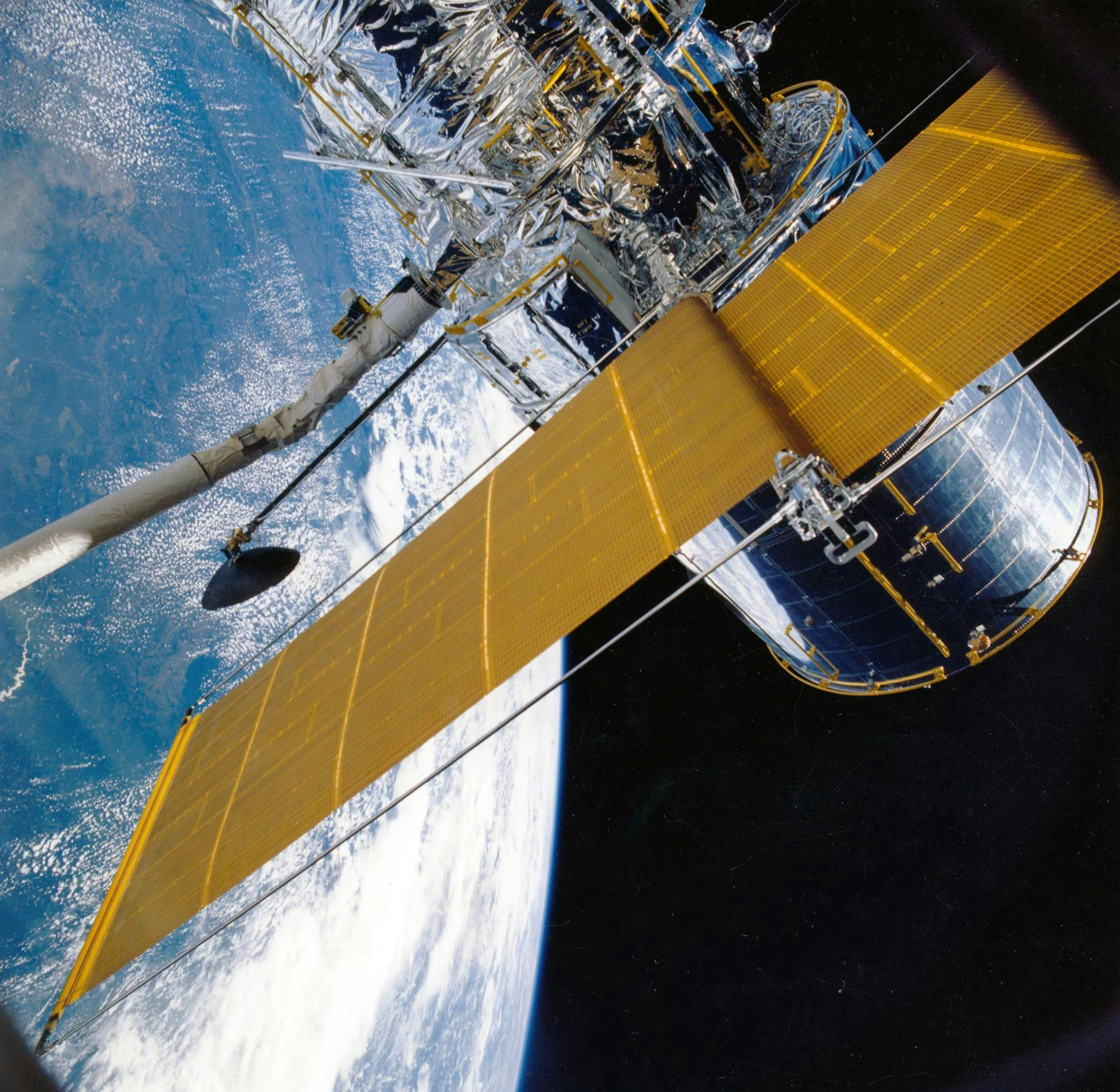
The most significant shift which needs to occur then, may be conceptual rather than systematic. As with many other industries, space is subject to similar market dynamics as infrastructure sectors on Earth: namely, capital allocation, ROI as well as competitive pressure. Despite these pressures, a market-driven space economy has the potential to scale far beyond what government funding alone could achieve. But it also introduces volatility, where projects rise and fall based on financial viability.
Conclusively, the balance sheets seem to rule the next frontier, even when it is framed in terms of technological feats. Beneath the tech narrative, the transformational nature of a capital strategy is being fortified. All space activity may soon revolve around the ability to afford to access space, rather than mere ambition alone. It is likely that in the years ahead, the success of space missions will depend less on singular breakthroughs, and more on a company's ability to sustain some form of financial logic. So while rockets may open up the pathway to space, it is undoubtedly capital which will determine how far, and how often we will travel that path.