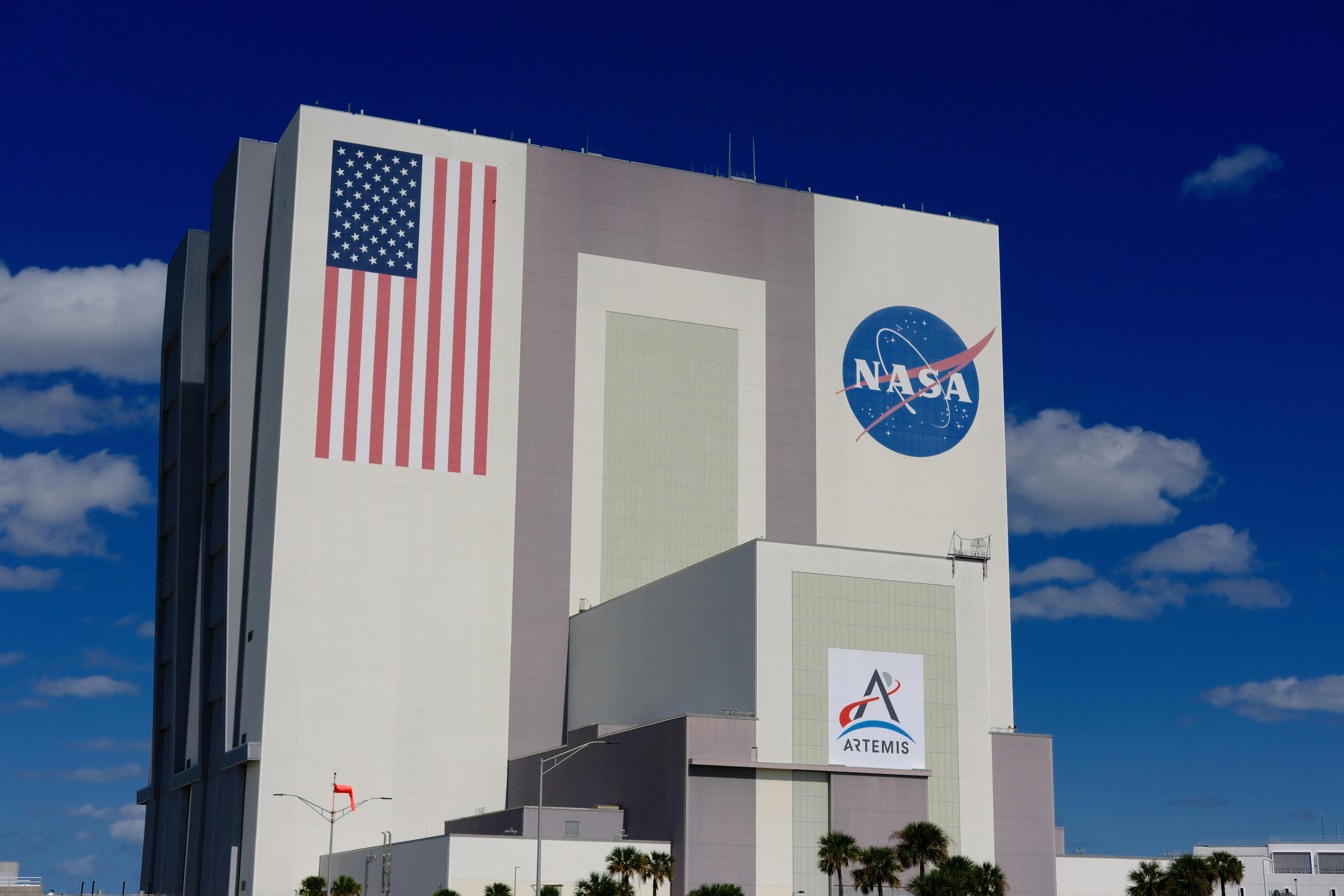
In a landmark milestone for humanity, and for the first time since 1972, human beings are once again leaving low Earth orbit (LEO). With the launch of the Artemis II mission on 2 April 2026, four astronauts are now travelling farther from Earth than any other humans have in more than half a century. During this historic 10-day mission, the crew will trace a looping trajectory around the Moon, before maneuvering through the power of gravity back into Earth’s atmosphere for reentry. It is a moment both heavy with symbolism, but its true significance lies not only in the resurgence of human space exploration, but the emergence of the age of industrialisation in space. Artemis II is the first crewed test of a system built for sustained human presence in space through the Space Launch System (SLS), and Orion spacecraft. Together, they represent the first attempts at establishing a repeatable architecture for human activity beyond Earth’s bounds.
A mission that tests more than hardware
The Artemis II crew consists of the following personal - Reid Weisman, Victor Glover, Christina Koch, and Jeremy Hansen. The crew includes the first woman and the first person of colour assigned to a lunar mission, ushering in a shift toward a more representative era of human spaceflight. Having begun their journey from the Kennedy Space Center, Launch Pad 39B, they also successfully completed a trans-lunar injection (this is an engine-burn sequence that propels the spacecraft out of Earth’s orbit into a trajectory towards the Moon).This event marked a threshold that has not been crossed since Apollo 17, launched on December 7, 1972. From there, the mission will follow a figure-eight trajectory, reaching more than 4600 miles (approx. 7400 kilometres) beyond the far side of the Moon. Contrary to some misplaced media musings, no actual landing will occur on the Moon, instead, the spacecraft will test life-support systems, propulsion, navigation as well as human endurance across the 10-day mission cycle. So while nostalgically reminiscent of the Apollo test flights, the context has shifted entirely.
The question of whether humans could reach the Moon was answered decades ago. What this iteration of the Artemis programme seeks to validate is whether humans can reach the Moon reliably, repeatedly, and within a space ecosystem that has the ability to scale.
The cost of legacy architecture
At the centre of this mission is the SLS, considered the most powerful operational rocket in the world. Its development began in earnest in 2010, and since then, at least USD 24 billion dollars have been invested into the program.[1] It is considered a somewhat pricey endeavour in light of the fact that each launch is estimated to cost between USD 2 billion and USD 4 billion. So while it is an undisputedly capable machine, it can result in economic strain. In contrast, commercial alternatives such as SpaceX’s Starship and Blue Origin’s New Glenn, are emerging at radically lower costs. In comparison, NASA was charged roughly USD 18 million for an initial New Glenn test flight, and about USD 90 million for Starship. Which begs the question: can legacy-state-led systems remain viable in a market increasingly defined by commercial efficiency?
From missions to systems
To date the Artemis programme has accumulated a bill estimated at USD 107 billion due to its highly ambitious and phased roadmap. Following Artemis II, Artemis III will aim to test docking with lunar landers as developed by SpaceX and Blue Origin. Following the completion of that mission stage, Artemis IV will serve to return humans to the actual lunar surface as soon as 2028. In relation to this, plans are already being made to construct a USD 20 billion-dollar lunar base, which will serve as a hub for the proliferation of orbital infrastructure and logistics architectures designed to offer a pathway to deeper space exploration. This is where Artemis connects directly to the trends reshaping the space industry.
Launch cadence, as demonstrated by companies like Rocket Lab, determines how frequently missions can occur. On the other hand, orbital logistics, as seen with new cargo systems such as Japan’s HTV-X1 transportation vehicle, define how supplies move. Multi-orbit navigation systems, such as those currently under development under the European Space Agency (ESA) programme, help enable precision and resilience. In this case, Artemis depends on all three of these capability layers, highlighting how complex and integrated the space economy is evolving to be.
The shift from exploration to infrastructure
The Artemis mission is defined by continuity. While the Apollo mission was a singular milestone, predicated on exploration, Artemis goes further to solidify infrastructure and seek stability in outer space. The differences are visible even when evaluating the distinct mission profiles. Artemis II is making a deliberate pause in LEO before committing to the next phase of its journey, in an attempt to verify safety before it proceeds. And even minor anomalies, such as the early technical issues with Orion (or the more laughable malfunction with the toilet system), are treated as critical data points needing refinement and scrutiny before moving on to the next checkpoint. In this sense, Artemis should be treated as the establishment of a space network, more than it is an expedition.

Constraints that will shape the future
Despite all the hope and inspiration this mission brings, constraints are plentiful. LEO is unforgiving territory, and the heightened safety protocols are a testament to how finely balanced these missions must be, due to their human cargo. Even though industrial scale remains the ultimate goal, the supply chain remains fragmented (currently this mission involves major contractors such as Boeing, Northrop Grumman and Lockheed Martin). Such setups are notoriously difficult to structure and manage. As already alluded, the economic outlook is perhaps the most decisive constraint. A system that costs billions of dollars per launch cannot easily support routine operations, therefore some cost reduction mechanisms or integration with commercial lunar systems may be necessary to sustain a lunar presence. And it goes without saying, that achieving the requisite political will across the entire global population remains a challenging task for international partners and administrations alike.
The future of human space exploration thus necessitates a hybrid approach that merges the stability of state-led programmes, with the efficiency of commercial systems. So while we revisit some elements of the past during this mission, we should also be forward thinking in viewing this event as humanity making the transition from explorers, to participants in a space system that aims to endure. The era has truly arrived where space truly moves from a frontier to an operational domain.