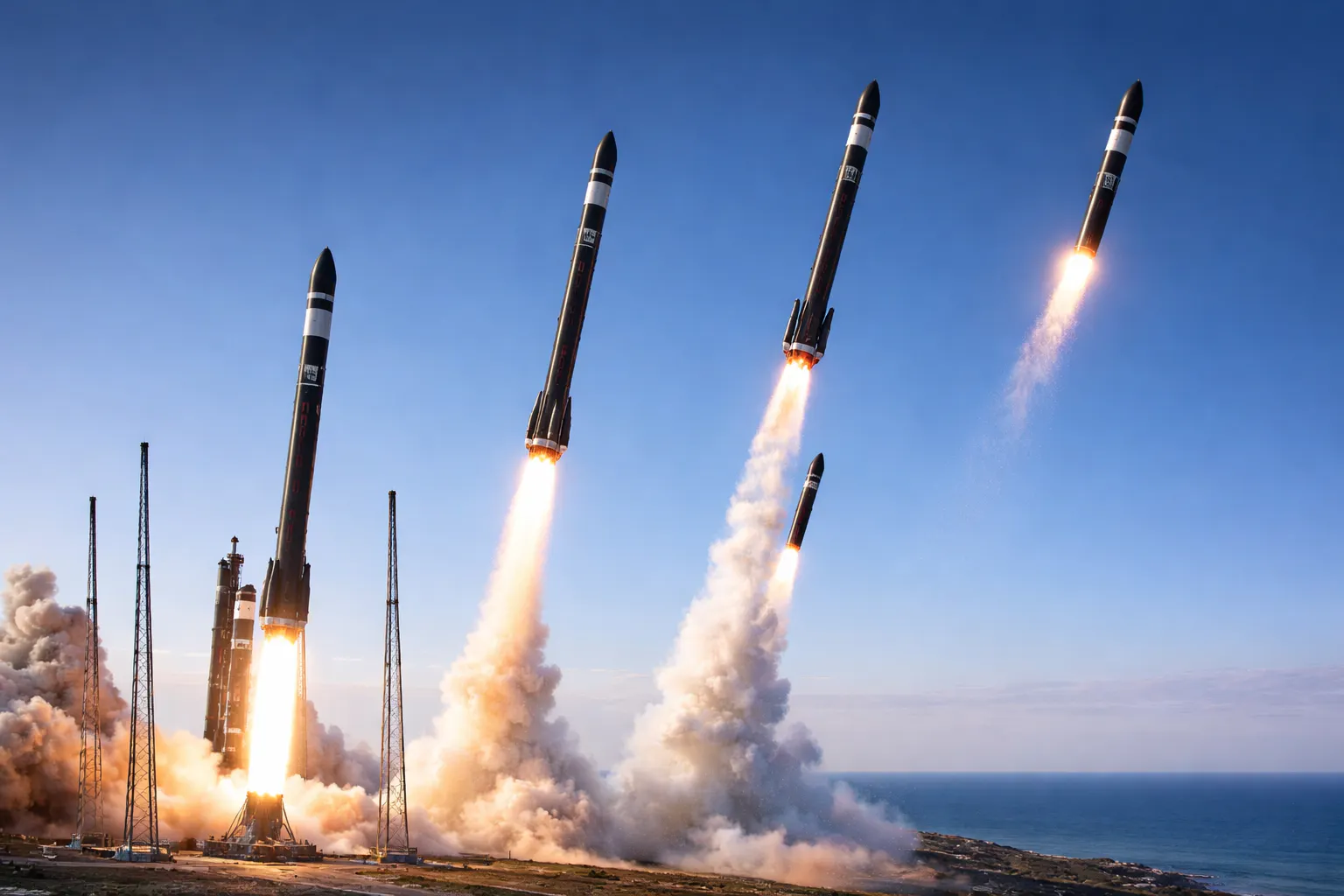
The global space economy is accelerating at the speed of light.What used to be the subject matter of science fiction, has quickly become the terrain for massive industrial growth and enabling infrastructure for the future digital economy.But what often goes overlooked is the backbone of the space industry itself: Launch, and specifically, launch cadence. We are referring here to the modality used to make sure space objects get to space and stay there. So while we marvel at the technology, applications, products and services that space permits, we also should ponder on the vehicles, or rather processes that lay the foundation for these benefits to come into effect.
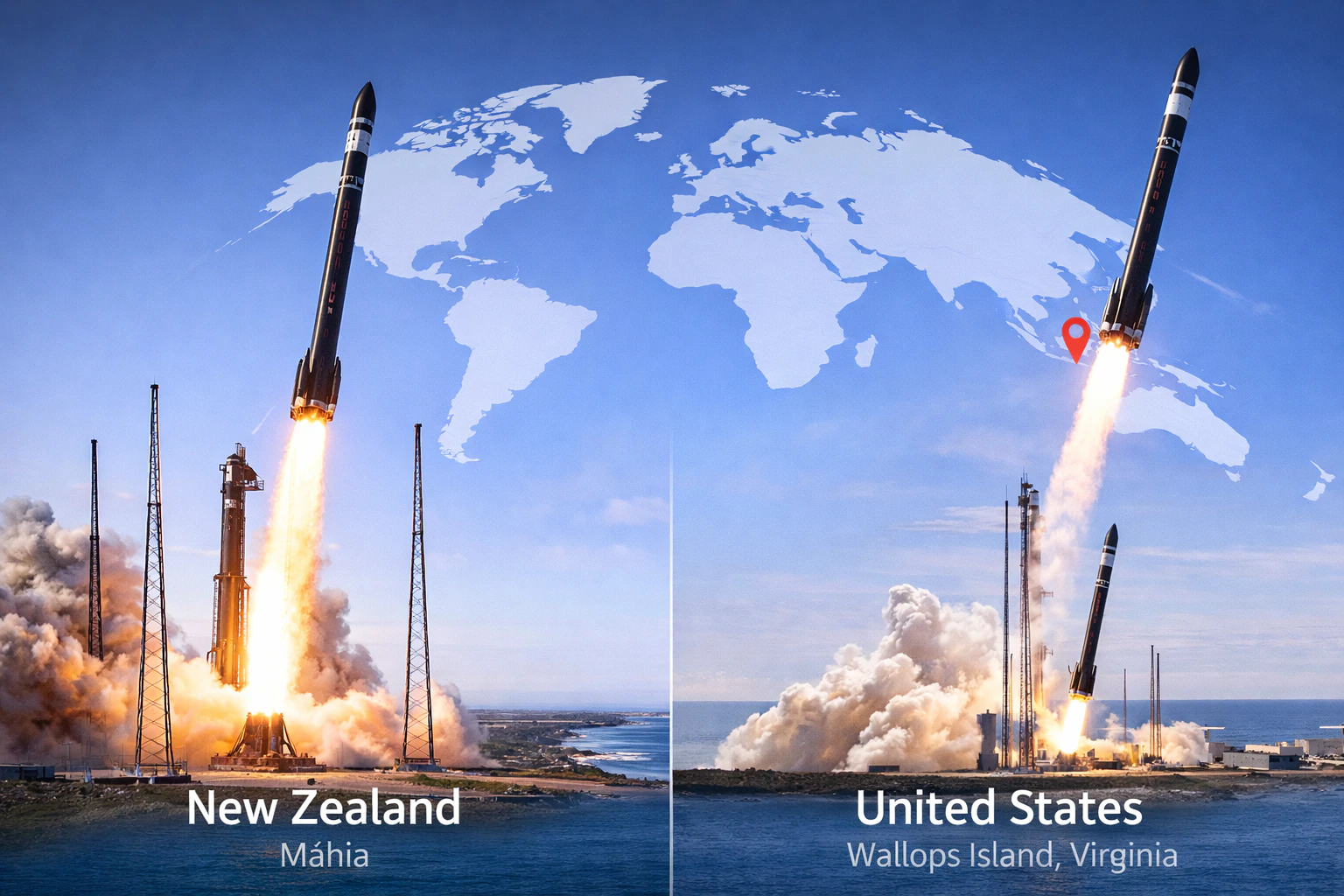
While launches were previously expensive spectacles, few and far in between, they’ve quickly become routine and in some cases, drastically more cost-effective than before. Most recently, Rocket Lab was able to execute two consecutive launches within six days, across different continents.This achievement demonstrated both Rocket Labs capability as well as its consistency in launch success. Which brings to bear that the new space age won’t necessarily be defined by the ability to reach space, but also by how often we do so. Launch cadence is therefore the ability to deliver to orbit frequently, reliably and on demand, and is a concept which is emerging as a central principle of the modern space economy.
Launch cadence can be analysed across three distinct metrics namely:
● Frequency - number of launches per year
● Turnaround time - time between launches
● Responsiveness - ability to launch on short notice
Small launch providers like Rocket lab are targeting dozens of launches annually, compared to historical norms of only a few per year for many systems. The company is specifically targeting cadence engineering through:
A dedicated small launch model - Electron is a rocket designed for rapid, repeatable missions rather than maximum payload
- Multi-site launch capability - Launches were recently conducted from New Zealand and the United States
- Vertical integration - Control is maintained across the entire supply chain through in-house manufacturing
- Operational proof point - Two launches in under a week showcases multi-theatre launch readiness
Rocket Lab’s launch enterprises began with the launch of Atea-1, which was a 6 metre tall vehicle reaching 120km in altitude in 2009. This was the first time a Southern Hemisphere company had reached space. From the outset, Rocket Lab was built on stated first principles, and this absence of legacy is what allowed a design philosophy to emerge premised on repeatability as opposed to singular achievement.This is the foundation of cadence and is what transforms launch service into a reliable supply chain input.
The higher the launch cadence means the faster satellites can be deployed, systems can be replaced, and also reduces the time-to-orbit for customers. And the proof is in the numbers. By late 2025, Rocket Lab had completed 74 orbital launches, with over 250 satellites deployed. The company has achieved a 94% mission success rate, and a 100% success rate overall in 2025. The fact that there is a 49-launch backlog reflects the demand for reliable launch slots, and with each repetition, complexity is minimised and routine is optimised. So what was previously a bespoke service, is quietly evolving into an industrial process serving customers like NASA, National Reconnaissance Office, DARPA and the United States Space Force, to name a few. These stakeholders have emphasised their desire to buy into reliable, timely and certain launch services, recognising that cadence is the main architecture upon which all other activities depend.
Both Rocket Lab and Space X have converged on the vertical integration model, which is a function of control over the vertical value chain (inputs, timelines and certainty). Though their scales and trajectories are different, the logic remains the same. In order to increase the frequency of launches, a company should be able to reduce dependencies on external systems that have the potential to introduce delays or risks to the mission process. Vertical integration reduces these dependencies and frictions between the various mission stages, enabling efficient end-to-end mission delivery.
Through its multiple acquisitions (including Sinclair Interplanetary, Planetary Systems Corporation, SolAera Technologies and Advanced Solutions Inc), Rocket Lab has slowly developed internalised critical spacecraft subsystems (reactions wheels, power systems, acquired payload technologies (separation systems, adapters) and built in house capabilities (avionics and solar power systems), all culminating into software platforms such as Photon which eliminate the need to coordinate with multiple vendors, and leads to tighter integration between launch and actual spacecraft operations. Compressing the number of failure points across the mission cycle is an indicator for Rocket Lab’s reliability model.
In contrast, SpaceX has pursued deep, end-to-end vertical integration and at massive scale. Its control spans launch vehicles (Falcon 9, Starship), engines (Merlin, Raptor), satellite manufacturing (Starlink), user terminals and launch infrastructure and operations. Crucially, SpaceX integrates demand itself through Starlink, effectively becoming its own largest customer. SpaceX sets itself apart by ensuring that cadence is continuously utilised due to the sheer volume of demand, hence, integration for volume. It goes without saying, and once again the numbers will show that SpaceX has been able to achieve a high frequency of launches, with relative scheduling flexibility as a result of the reduced need for reliance on external customers to sustain launch cadence.
What both of these entities exemplify however, is that vertical integration is a growth strategy as much as it is a control mechanism. Time is the ultimate currency within this strategic environment, but even the most advanced launch systems remain susceptible to:
1.Physical Constraints
Cadence can still be constrained by launch site availability, unpredictable weather windows, and range scheduling (launches should coordinate with airspace, maritime and other mission closures to be viable).
2.Industrial Constraints
Production must maintain quality and be able to scale without defects. In addition, other components may be subject to global supply chain disruptions.
3.Regulatory Constraints
Launches require regulatory approvals, and high-frequency launches can challenge traditional review cycles or test bureaucratic capacity. There is also increasing scrutiny on emissions, debris and local environment impact.
4.Economic Constraints
Perhaps underdiscussed is the fact that launch cadence only creates value when it is used. High cadence requires consistent and predictable payload pipelines. SpaceX mitigates this through internal demand for Starlink, whereas Rocket Lab relies more heavily on commercial customers and government contracts. Unused launch capacity results in sunken costs, thereby threatening operational efficiency and profitability.
Ultimately, the promise of launch cadence lies in mastering constraints. Physical limits can be navigated, industrial systems can always be optimised (as evidenced by Rocket Lab). Regulations can be adapted, and markets can be cultivated. The companies that will ultimately succeed are those that are able to design their systems to move through space mission operations repeatedly, reliably and at scale.