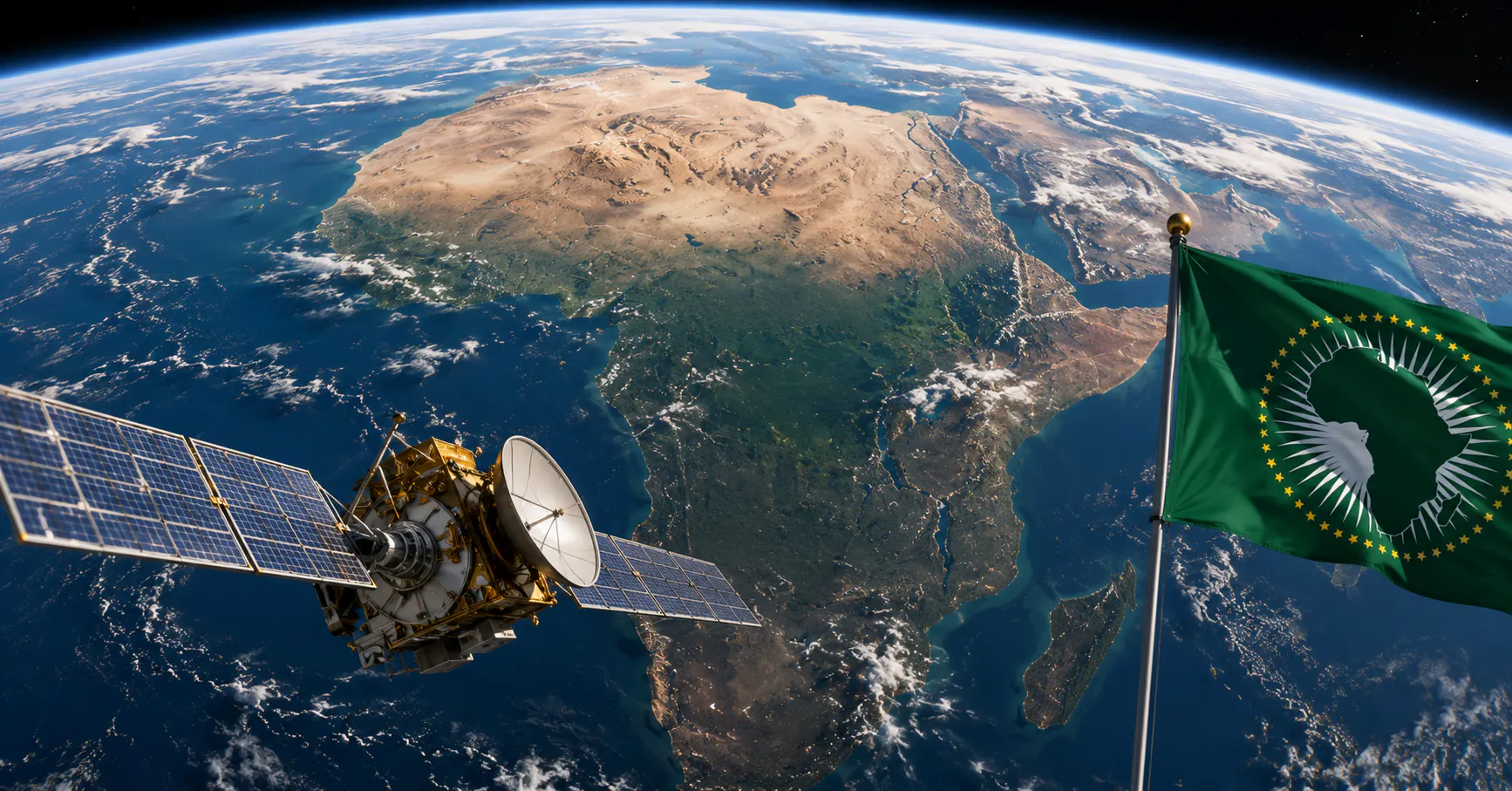
The African Union (AU) is a regional body which consists of 55 member states. It began in 2002 following the establishment of the Organisation of African Unity (OAU) in 1963-1999.The AU itself was launched by decision of the OAU in July 2002, in Durban, South Africa, after its predecessor determined that a new organisation was required to further the interests of the region. African leaders were in consensus that Africa’s potential could be fully realised through the relaunch of a pan-African organisation premised on increasing integration and cooperation between states, as opposed to addressing the inequalities of colonial and post-colonial strife.
Under this decision, it was agreed that the AU would be guided by an overarching vision of “an integrated, prosperous and peaceful Africa, driven by its own citizens and representing a dynamic force in the global arena.” Under the Constitutive Act of the AU, and the Protocol on Amendments to the Constitutive Act of the AU,17 broad aims were detailed including ambitions for peace, security, unity, stability and sustainability of processes and prosperity for Africa.
Astronautics & Space Political Development in Africa
The first satellite built and launched on behalf of an African country was Nilesat, which was constructed and operated with the support of the European Space Agency (ESA) in 1998. The first African-designed satellite was launched on February 23, 1999 and was the result of a University tech demonstration. To date, 15 African countries have contributed to 58 satellite projects, and at least 318 companies specialise in space products and services for the African and global market.
As early as October 2006, the AU was forging a tentative role in Africa’s space development, through the Maputo Declaration, which would serve as the precursor of the EU-Africa partnership for capacity-building in Earth Observation (EO). The program would later become a flagship of the AU’s Outer Space Program, known as the Global Monitoring for Environment and Security (GMES), and would signal the need for institutional and international cooperation towards Africa’s sovereign use of space for sustainable development.
In 2010 African authorities began discussions in earnest on a regional space program, and in 2012, the AU Space Working Group (AUSWG) was established. In 2014, H.E Dr. Nkosazana Dlamini Zuma, who was then Chairperson of the African Union, gave a statement at the 5th EU-Africa Private Business Forum in Brussels, Belgium, wherein she noted the steady progress of African countries such as Nigeria and South Africa in space. She also applauded the inception of the Square Kilometer Array, slated as the largest radio telescope array in the world, 80% of which would be based in Africa. These remarks were made on the backdrop of the need to catch up with contemporaries and achieve development goals in space which would benefit the African citizenry. In 2016, the outcomes of the AUSWG would be realised through a dedicated African Space Policy & Strategy which provide both strategic goals and implementation steps respectively.
To further consolidate the continental program, a series of baselines studies on 4 key segments in the industry were identified and carried out by Space in Africa in 2020. These studies were to identify the socio-economic benefits for the establishment and operationalisation of the Africa Space Agency (AfSA) in EO, satellite communications, astronomy, space services, and other socio-economic benefits of space.[1] In 2021, these developments were to culminate in the hosting of the first African Space Week, which was to gather all players, including space actors, decision-makers and end users, to discuss methods of strengthening the intra-African and international collaboration in space activities.This meeting was postponed indefinitely.
Perhaps the hallmark of the AU’s support for space technology uptake and integration is the coming into being of the much-anticipated AfSA, which was constituted via Statute, specifically Article 2 of the Statute of the African Space Agency. The provision reads that AfSA was established in accordance with the provisions of Article 5(2) of the Constitutive Act as an organ of the AU and would function to coordinate the use of space technology for regional development.Since that proclamation, the headquarters have been administered from Cairo, Egypt, and technical and financial considerations are developing.
SWOT Analysis of the AU’s Role in Regional Space Development
To its credit, the AU has succeeded in the creation of innovative decision-making structures which reflect the need for good governance in matters pertaining to peace, security, human rights, and science & technology, to name a few.[1]For this reason, the topic of space for sustainable development can be championed to foster regional integration, as a viable trade industry, under the Africa Free Continental Trade Agreement (AfCFTA). The importance of linking the space trade to wider continental growth prospects must be made before the Assembly of the African Union, which was formerly known as the African Union Assembly of Heads of State and Government (AU-AHSG), is the highest decision-making organ of the AU.
To its discredit, however, the AU’s track record for implementing decisions, particularly at the member state level, is decidedly poor. Estimates suggest that only 15% of decisions made overall by the institution have been implemented in full since 2001 (this can be attributed in part to the fault of the body and in another part, the fault of the states themselves which do not comply with domestication protocols to enforce decisions at state level).The author supposes that the challenges in the decision-making capacity of the AU lies in its designation as an intergovernmental organisation, as opposed to a supranational entity, the latter which would afford the AU the necessary powers of enforceability of its decisions. It is evident that the decision-making process is ultimately influenced by the member states which have inherent interests in its final outcome. In the interests of public policy, it is recommended that the decision-making process factor in the opinions of various sectors of society, and especially civil society (through the Pan-African Parliament, for example), to ensure that political will is maintained in decision outcomes.
Referencing the African Space Agency’s recommendations for a strong and united Africa in Space, the next steps will be for Africa to: Bolster local content rules: whilst building capacity, local entities should be protected from the effects of international trade; Leverage alternative financing mechanisms: access to additional sources of capital will increase the scope and quality of industry initiatives, and; Focus on policy implementation and enforcement: maintaining a consensus-based strategy for negotiating and resolving agreements/disputes will instill confidence in local processes.
The AU’s ability to effect change at the micro and macro level through space will ultimately hinge on its ability to manage current challenges affecting the growth of the industry. These challenges include lack of infrastructure, a lack of skilled personnel, large capital costs of implementing space and big data application projects, and the regulatory challenges associated with doing business in space, and with multiple partners. The author supposes that solutions will be found in following an extensive learning period, characterised by intra-national dialogue and international capability-building, to ensure that the governance structure is well-suited to ecosystem needs, and adapts to the growing standards of international competition.