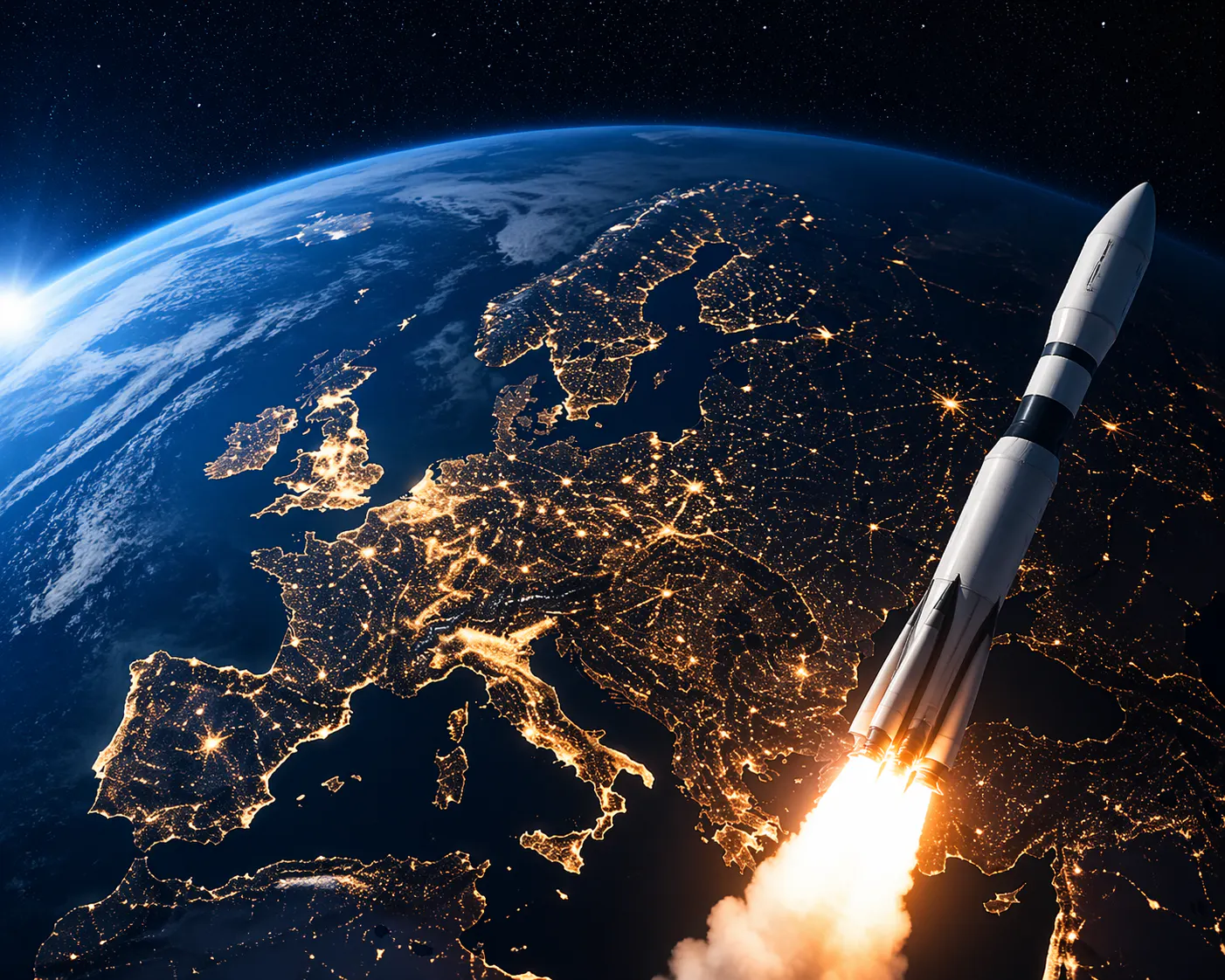
The Ariane 5’s retirement represented a strategic and technical gap. While satellites were built during this period, and missions were planned, the fundamental question lingering beneath it all was how to operate in space if a stakeholder could not reliably get there?
Ariane 6 and Vega-C’s imminent return to flight marks the end of that contradiction for Europe.Together, they help restore the region’s independent access to orbit, but more than that the deeper truth about the modern space economy, namely that access is not a given guarantee. It is at the core critical infrastructure, like any satellite or space object, and like all infrastructure, it must be continuously tested, and, when necessary, rebuilt.
Ariane 5 was for a long time the backbone of European heavy-lift capability, and was unfortunately retired after decades of reliability. Vega-C, serving smaller payload, was grounded following a failure linked to its second stage. During this time, and to compound the foregoing state of affairs, geopolitical tensions also severed access to Soyuz launches from Europe’s spaceport in French Guiana.
Resulting, a structural imbalance was formed where Europe, while fortunate in retaining its world-class satellite manufacturing and navigation systems such as Galileo, as well as its ambitious exploration programmes, lacked a fully operational, sovereign launch capability. This translated to an increased reliance on external providers, most notably SpaceX, for missions that were once launched domestically. This dependency exposed vulnerabilities in critical infrastructure, recasting launch capability as a strategic necessity.
The reintroduction of Ariane 6 and Vega-C will serve to restore access to space. Ariane 6, which first flew on 9 July 2024 from Europe’s Spaceport in French Guiana, represents the next generation of European heavy-lift launchers. Standing over 60 metres tall and weighing close to 900 tonnes at liftoff, it is a modular system available in two configurations: Ariane 62, with two solid boosters, and Ariane 64, with four. This flexibility allows it to serve a wide spectrum of missions. This development is a deliberate shift towards a more commercially responsive architecture. Notably, Ariane 6 can deploy large institutional payloads and smaller satellites through rideshare configurations, crucial in an era defined by constellations and distributed systems, where such flexibility is essential.
By contrast, operates at a different scale. With equal strategic importance as its counterpart, a Vega-C single-body rocket nearly 35 metres tall can deliver up to 3.3 tonnes to low Earth orbit, which is optimal for missions requiring versatility. Its payload adapters allow for configurations ranging from CubeSats to dual large payloads, reinforcing its role as a flexible, precise and, multi-user platform. Together, these systems are complementary architecture, where both are designed to serve the full spectrum of European launch demand.
Launch cadence is emerging as a preeminent pattern evolving across the space economy. As discussed in previous articles, it is becoming the foundation of an interconnected space ecosystem.
Navigation constellations cannot be deployed without reliable launch capabilities. The same goes for orbital logistics as well, let alone satellite-based services. Ariane 6 and Vega-C are therefore synergistic programmes providing an entry point to Europe’s scaling broader ambitions in space.
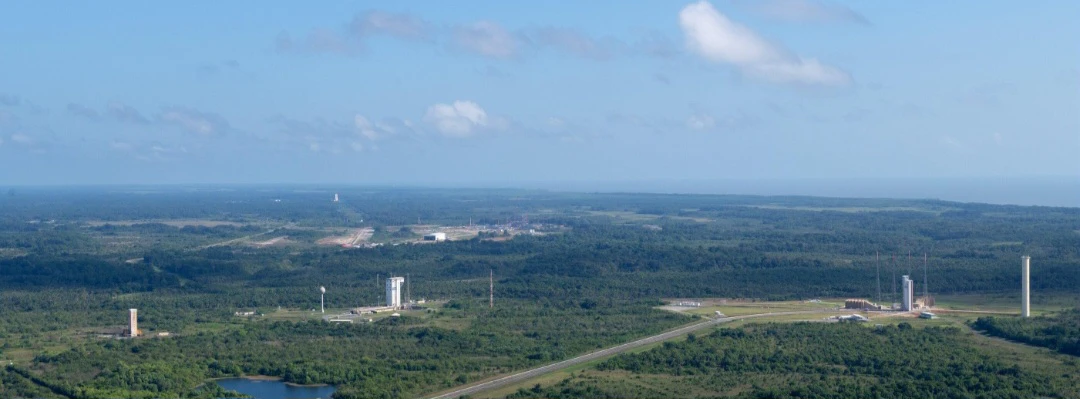
Yet, launch remains uniquely constrained, bound by physical infrastructure, as well as environmental conditions and orbital mechanics. Every mission needs to be a coordinated interplay of industrial precision coupled with natural uncertainty. Delays are considered a normal occurrence to be expected and naturally embedded in the system.
Europe’s challenge becomes most apparent in this stage. While improving cost and flexibility, Ariana-6 is also still entering a market increasingly defined by high-frequency launch models. The benchmark and accordingly its ability to weather these changes, is once again optimising cadence over capability.
When comparing Ariane-6 to industry competitors such as SpaceX, the contrast is often framed in terms of innovation, highlighting a divergence in philosophy. SpaceX, under Elon Musk, has embraced rapid iteration and vertical integration. Though high risk, this tolerance for failure has proven to accelerate development cycles.
In comparison, Europe’s approach has historically prioritised reliability and consensus. Ariane 6 itself is the product of a vast industrial network spanning hundreds of companies across 13 countries, coordinated under the leadership of ArianeGroup with infrastructure managed by CNES. This model exemplifies strengths of multinational cooperation, but also, due to its multistakeholder, multi-jurisdictional nature, it is also prone to inherent complexity.
The result is a system that is as complex as it is robust, but not always agile. Ariane 6 and Vega-C offer an opportunity and attempt to evolve this model of retaining reliability while introducing greater flexibility and competitiveness.
Despite returning to flight, Europe’s launcher crisis does not immediately alleviated. Rather, the same challenges are likely to persist within a more demanding and dynamic environment. Launch operations remain tied to a number of physical constraints, including access to a limited number of sites, particularly Europe’s Spaceport in French Guiana. Weather conditions, orbital alignment, and range scheduling also undoubtedly influence launch windows.
Industrially, manufacturing throughput requirements affect Ariane 6’s supply chain, which can span multiple countries. In addition, Vega-C relies on specialised components such as the shared P120C solid booster developed through Europropulsion. Any disruption is thus deemed as having a ripple or domino-effect across the entire supply chain.
Regulatory processes add further layers, ranging from licensing to environmental compliance and orbital debris mitigation. Ariane 6’s upper stage, however, powered by the reignitable Vinci engine, includes a final deorbit burn specifically designed to reduce space debris, which is an increasingly important requirement in a congested orbital environment.
Economically, the equations can be terribly unforgiving, as expected of the capital intensive nature of space endeavour. Launch cadence must always align with demand, and Ariane 6’s upcoming missions for Amazon’s low Earth orbit constellation (part of a broader contract for 18 launches) illustrates the importance of securing sustained demand. Without it, even the most capable launch system risks underutilisation.
To summarize, the return of Ariane 6 and Vega-C will certainly restore Europe’s ability to act independently in space, having immediate implications for defence and security, where assured access to orbit is essential. It also strengthens Europe’s position in the global space economy, enabling it to compete more effectively in satellite deployment and related space services.
At a broader level, it signals a shift in how space capabilities are understood. As mentioned severally, launch cadence is a core component of sovereignty, underpinning all sub sectors of the space industry, including communications, navigation, and Earth observation which are critical pillars of the ESA space program.
At the same time, developments such as Vega-C’s future evolution towards Vega-E, and early work on reusable technologies indicate a recognition that the next phase of competition will be defined by sustainability.
The return of Ariane 6 and Vega-C closes a critical gap, but it also reframes the conversation around achieving full autonomy and progress in space. In this brief pause, Europe was forced to confront how fragile that access had become. What has since emerged from this unforeseen delay, is the development of an even more efficient pair of rockets, and a renewed understanding of launch as infrastructure: though complex, indispensable, and deeply strategic.