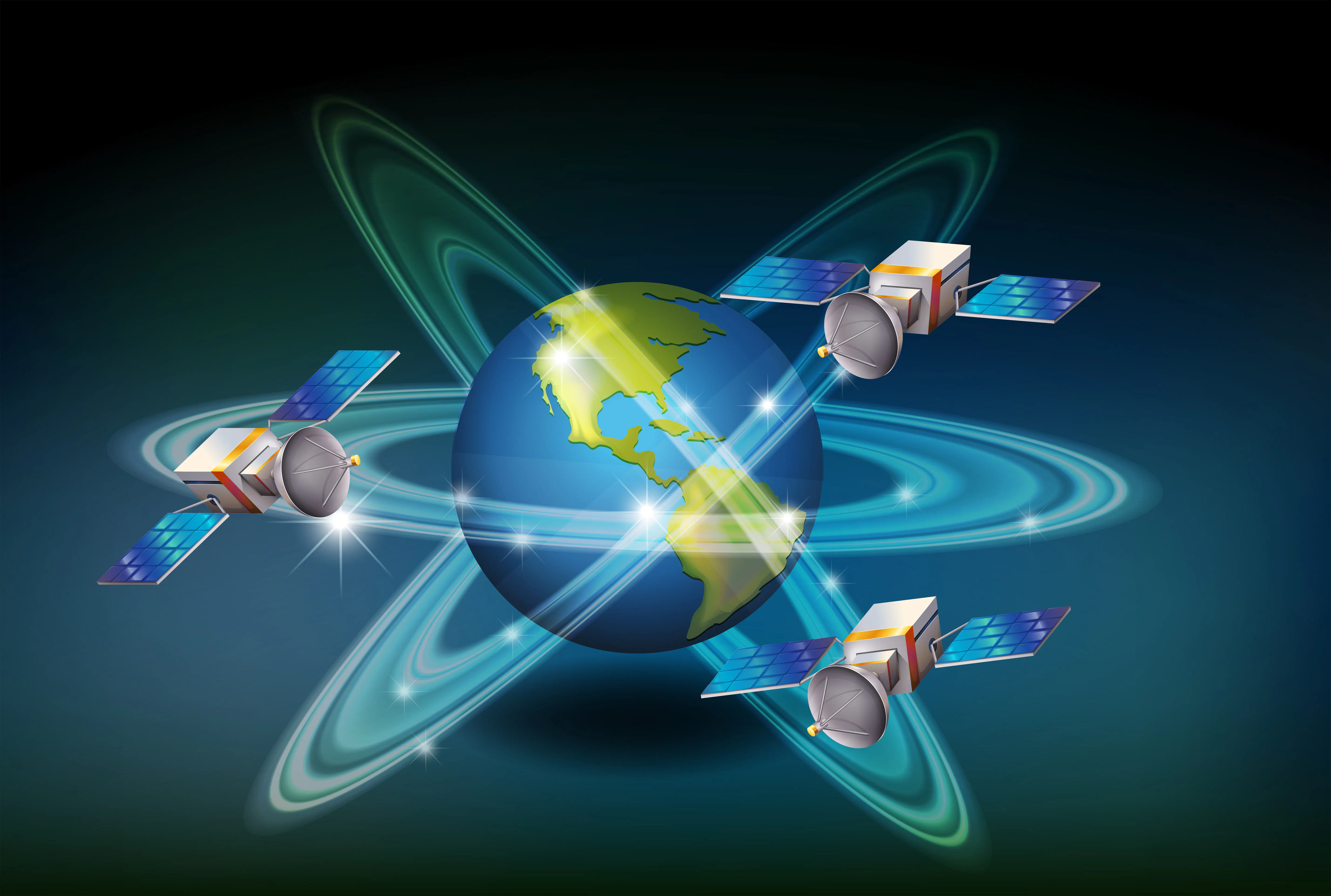
Over 600 million Africans remain offline, but satellite-to-phone could change that overnight. Recently, Zambia became the first African country to test satellite-to-phone connectivity using the Starlink direct-to-device model. This test enabled a mobile money transaction through satellites in orbit, and represents an industry shift that could revolutionise telecommunications on the continent. This follows as international corporations such as AST SpaceMobile also ramp up their operations, forecasting up to USD1 billion in sales for 2027.
What satellite connectivity stands to achieve, particularly in remote communities, is to bridge the historical connectivity divide by bridging a new divide between terrestrial and orbital networks.
Global Transition: The rise of non-terrestrial mobile networks
Non-Terrestrial Networks (NTNs) are airborne communications systems (such as satellites, High-Altitude Platforms (HAPs) and drones etc) which serve to extend terrestrial coverage (ground-based infrastructure such as telecommunications towers). They are especially critical for the extension of 5G and future 6G ecosystems, and will support the broader proliferation of global coverage and various Internet of Things (IoT) and advanced digital applications.
Where previously satellite NTN’s provided redundancy support, they are now becoming direct components of the mobile networks themselves, with private companies such as Starlink, AST Mobile, and Lynk Global pursuing this architecture. Their business models are premised on allowing even ordinary LTE-capable smartphones the opportunity to connect directly to satellite without the need for any specialised hardware. The commercial and societal appeal is both tangible and necessary in an era where accessing the internet is becoming increasingly recognised as a fundamental human right, and a large population of the globe remains unconnected. As of 2025, about 74% of the world’s population are online, this leaves approximately 2.2 billion people still without access however.
Case Study 1 - Starlink’s Direct-to-Cell model
Starlink’s direct-to-cell service relies on partnerships with existing mobile operators or acquisitions.This enables the satellite to essentially act as a telecommunications tower in space, albeit with roaming capabilities. The satellites themselves carry what’s known as an eNodeB modem, which is an LTE base station technology. In order to operate it legally however, Starlink requires access to licensed spectrum bands as part of national regulatory compliance requirements. Such rights are typically granted to Mobile Operators through licenses and authorisations granted by the appropriate Ministry or Authority governing communications within the region. Having received such authorisations, the mobile operators can then lease or share their spectrum with Starlink, allowing the latter to broadcast signals compatible with existing LTE smartphones.
The end result is that the end user is able to connect to the Starlink satellite as if they were roaming on another operator’s network, with the mobile operator managing the billing and authentication. In the past, SpaceX has purchased spectrum directly, for example when it paid USD 17 billion to acquire Echostar’s AWS-4 and H-block licenses to strengthen its global coverage and rollout. This is an opportune moment for Starlink, which is eyeing global scaling at a rapid pace, integrating existing telecom infrastructure with satellite backhaul. Owing to its advantage in owning the vertical integration in launch capabilities, its sure to continue to expand its constellations. On the downside, its smaller antennas usually translate to lower bandwidth per user, with some regions also already experiencing capacity constraints, particularly in dense populations.
Case Study 2 - AST SpaceMobile’s space-based cellular towers
The key distinction between the AST SpaceMobile and Starlink is that the former is primarily concerned with creating full broadband access (4G/5G) directly to smartphones, while Starlink is initially expanding from SMS to voice and data. AST Mobile utilises its BlueBird satellites carrying large phased-array antennas, also designed to connect directly to capable smartphone models.AST is likewise focused on operator partnerships to secure spectrum, and has worked on pilots with companies such as Vodafone, AT&T and Rakuten Mobile to name a few. Though its deployment has been slower than its counterpart, its potential to deliver real mobile broadband directly to phones in the absence of cell towers could leapfrog infrastructure challenges in Africa.

In March 2026, AST achieved the successful deployment of its next generation BlueBird 6 solar arrays, which exceeded design peak data rates of 120Mbps satellite marking a transition from an R&D start-up into a revenue generating company. On Tuesday, March 3, 2026 it was also announced that Axian Telecom and AST SpaceMobile, Inc would be partnering to provide Africa’s first space-based cellular broadband network.[1] These satellites have already begun to deliver broadband connectivity to unmodified smartphones, fulfilling AST’s vision of turning the sky into a global cellular network. In addition to this, the company has also received strong financial backing ensuring continued growth.
In comparison to Starlink, AST’s satellites make use of broad antennas capable of broadcasting higher bandwidth, which is a useful design when considering its positioning for 5G usage. But with larger antennas comes larger satellites, which further translates to a higher deployment cost. In the long-term, this results in slower deployment, and sometimes complex planning and timelines for constellations.
Strategic Implications
Satellite-to-device connectivity is a gamechanger for digital transformation especially in Africa, where it would support infrastructure gaps, benefit from rapid mobile adoption, and support the ongoing development of financial services platforms. This makes it a critical tool for solving sustainability challenges. Furthermore, the Starlink test in Zambia demonstrates how multi-layered space applications can be, with the mobile money transaction merging telecommunications connectivity, financial inclusion and satellite infrastructure integration in a cross-cutting solution that embeds space into everyday economic life.
There are still some regulatory hurdles to overcome to bring to effect the full benefits of direct-to-device business models, firstly in spectrum coordination. Since satellite operators still need to use mobile operators spectrum allocations, over time this may lead to coordination challenges. Secondly, on the matter of licensing requirements, when we have international private companies operating in different countries, who becomes the regulating authority? Would it be the telecom or the space regulator and both, and what implications does this have in the case of disputes resolution, which are all too common in the business world. Thirdly, when it comes to cross-border connectivity, satellites differ from their terrestrial counterparts since they are continuously moving through orbit. This means that each jurisdiction the satellite passes through may have different compliance requirements based on national licensing regimes. These complications are currently being addressed within ITU meetings for NTNs.
Further implications could be discussed from a socio-economic perspective starting with the questions of satellite connectivity may raise for technological sovereignty, especially where the nations that are being served are considered emerging space nations. Such nations end up relying on this last mile technology to service critical needs such as for disaster resilience, where satellites maintain connectivity where poor infrastructure may fail. Authorities regulating anti-competitive practices may also have to consider safeguarding local capacity, where foreign satellite operators may begin to compete and even monopolise the sector, competing directly with telecoms operators. Despite the foregoing challenges, which may be resolved with earnest policy-making and stakeholder dialogues, direct-to-device still represents a monumental opportunity for the next-generation of digital infrastructure for African and global society.
For the majority of the mobile era, connectivity was predicated on the existence of mobile towers solidly anchored to Earth’s terrain. In the next coming decade or so, some of the most important configurations for everyday communications may very well be orbiting above it.